
Emergency Air Duct Cleaning Near Me: What SouthPark Homeowners Should Do First
The single most common mistake SouthPark homeowners make after a water intrusion or smoke event is running the HVAC. It feels like the right move – get the air moving, clear the smell – but it does the opposite. A running system pulls the contaminant through the return, coats the coil, and pushes it out of every supply register in the house before anyone has assessed the source. Stop the system first. Then read this triage guide. If you’d rather not troubleshoot it yourself, call (833) 468-3043 and we’ll walk you through the first steps.
What Counts as a Duct Emergency in SouthPark?
A duct emergency is any situation where a contaminant is actively entering or has already entered the air-delivery system and will get worse if the system runs – not just a dirty duct that’s been dirty for years. A routine cleaning can wait a few weeks. A true emergency has a source, a spreading path, and a clock running on it.
These are the situations we treat as urgent in SouthPark homes:
- Smoke or fire odor after a kitchen fire, chimney backdraft, or a neighboring unit’s fire. Smoke residue is oily and settles on duct walls and the coil. Running the fan redistributes it.
- Sewage backup near the air handler. If wastewater has reached the mechanical closet or the return plenum, the biological risk is real and the system should not run.
- Post-flood water inside ductwork. Water sitting in insulated flex duct or a low run of rigid duct is a mold nursery. It does not dry out on its own in a closed system.
- Rodent intrusion. Droppings, nesting material, and urine in the ducts are a genuine contamination event, not a nuisance. The system should stay off until it’s cleared.
- Visible debris blowing out of registers. If you can see particles leaving the vents when the fan runs, the contamination is past the filter.
What is not an emergency: a dusty return grille, a musty smell you’ve noticed for months, or a general “it’s probably time” feeling. Those are scheduled air duct cleaning jobs, and they can be planned rather than rushed.
The Triage Protocol: What to Do Before Anyone Arrives
Shut the system off at the thermostat first. Not to fan-only, not to low – off. Then work through the rest in order.
- Kill the air handler. Thermostat to OFF, and if you can safely reach the breaker for the air handler or furnace, switch it there too. This stops the spread.
- Close the registers in unaffected zones. Shut the supply dampers or grilles in rooms that aren’t impacted. It limits cross-contamination through the trunk line while the system is down.
- Open windows on the affected side of the house if outdoor air is cleaner than indoor. Not helpful during a smoke event from outside; very helpful after an indoor spill or sewage backup.
- Document everything. Photograph the source, the register grilles, any visible staining on the ceiling or duct board, and the thermostat reading. Note the date and time. If your insurer will be involved, this is the file they’ll ask for. Keep receipts for any emergency mitigation you pay for.
- Don’t spray anything into the ducts. No enzyme sprays, no disinfectant aerosols, no “duct freshener.” A coating applied before the source is removed can trap contamination in place and complicate the cleaning.
- Keep people and pets out of the affected rooms until a technician has assessed. This matters most for anyone with respiratory sensitivity.
In SouthPark, most of the homes we work in have multiple zones and finished basements, so the “close off the unaffected zones” step is more consequential than it sounds – a single closed damper can keep a basement contamination from ever reaching the main floor.
Why a Standard Cleaning Crew Can’t Always Handle a True Emergency
There’s a real difference between cleaning a system and containing a contaminated one. A standard cleaning setup pulls debris from the ducts and filters the exhaust. That works well on a normal dirty system. It is not enough when the contamination is biological or when there is water sitting in the ductwork.
A true emergency scope needs three things a routine cleaning doesn’t always include:
- Negative pressure and HEPA-level exhaust filtration during the work. The contaminant has to be captured, not just agitated. This is where Abatement Technologies filtration equipment belongs – it’s the same standard used in professional remediation, and it’s what keeps the air in your SouthPark home from getting worse mid-job.
- Assessment before cleaning. The technician needs to see the source, the extent of spread, and whether the duct material is salvageable or needs repair. Skipping straight to a cleaning wand is the red flag to watch for.
- Sanitizing after removal. Once the source and debris are out, the system gets treated. We apply Guardsman-grade protection standards to the sanitizing step so the treatment is documented and appropriate for the system.
If a company quotes a flat cleaning price over the phone without asking what happened, that’s not an emergency response – that’s a scheduled cleaning with a faster arrival time. And with visible water in the ducts or a sewage event, the honest answer is that a cleaning alone may not be the right scope.
What a Legitimate Emergency Response Looks Like
Assessment first, then cleaning, then sanitizing. That order is the whole thing. A company that reverses it, or skips the first step, is guessing.
Here’s the sequence we run on an emergency call in SouthPark:
- Source identification and containment check. Where did it enter, how far has it spread, what’s the duct material, and is the air handler itself affected? The coil and blower are part of the system even though they’re not ductwork.
- Photo documentation before and after. You should be able to see what came out of your own ducts. This is also what an insurer will want if you’re filing a claim.
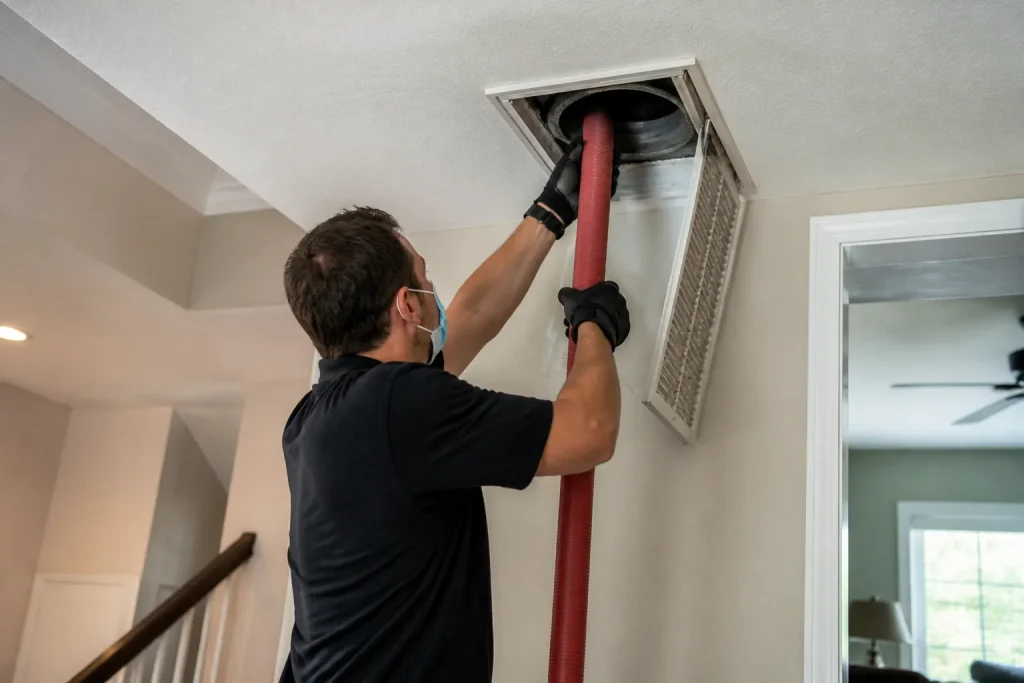
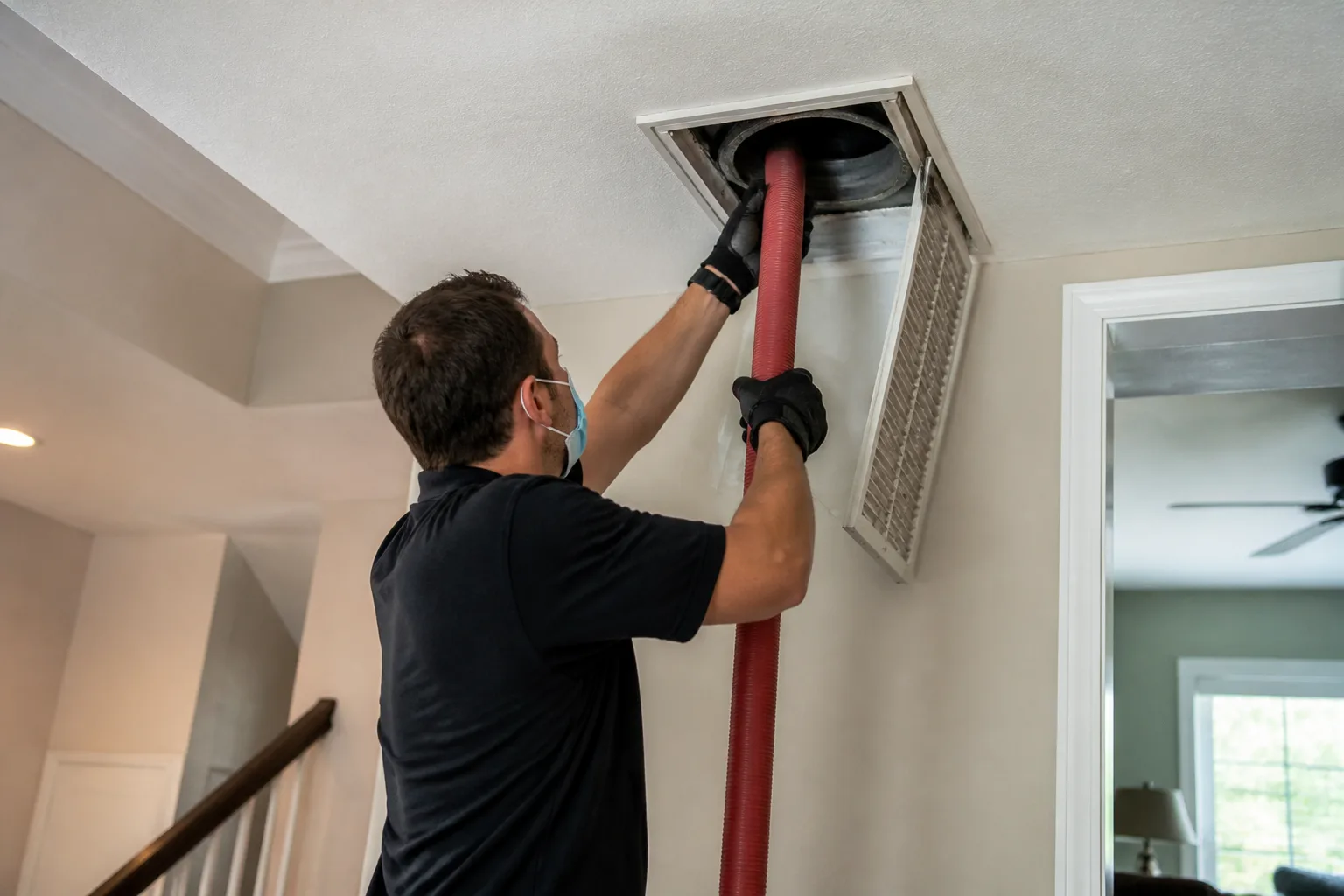
- Cleaning with contractor-grade equipment. We run Rotobrush and Nikro systems – the same class of equipment commercial contractors use, not a shop-vac with a brush head. On a contaminated system, that difference is the job.
- Sanitizing the system after the debris is gone. Not before. Disinfectant sprayed over undisturbed debris doesn’t reach anything.
- Duct repair and sealing if the contamination came in through a gap. A rodent intrusion or a failed connection at the plenum means the source is still there until it’s sealed. Cleaning without repair just invites a repeat.
That last point matters more than most homeowners expect. If the ducts are leaking at a joint, a return, or a boot, the contaminants got in through that gap and will get in again. We handle Air Duct Cleaning SouthPark as a full-system job specifically because the repair part is often what actually solves the problem.
Same-Day vs. Next-Day: What’s Realistic in SouthPark
Here’s the honest answer on timing: some emergencies can be handled the same day, and some genuinely need a scheduled scope. What can’t happen is a full remediation on a duct system with water in it in the same visit as the diagnostic call. The system needs to be inspected, documented, and scoped before the work is pitched.
What we can realistically do:
- Same-day: a same-day assessment, an emergency containment check, and starting the cleaning when the scope is straightforward – smoke odor, a debris event, a rodent clearing.
- Scheduled next opening: any job where there’s water in the ductwork, sewage contamination, or duct material that likely needs replacement. These need a written scope and a plan, not a rushed wand pass.
We answer 24/7. Fast dispatch from 7am to 7pm, Sunday through Friday. We’re closed Saturday – a call that comes in Saturday books into the next opening, Sunday. A call outside dispatch hours is booked into the next opening, Sunday through Friday, 7am to 7pm. On a Saturday, the triage steps above still buy you time. Shut the system off, close the registers, document, and wait for dispatch on Sunday.
While the duct system is down, if the dryer has been running in a wet or smoky house, it’s also worth scheduling dryer vent cleaning – the lint load in a vent line is one of the leading household fire risks, and checking it during a system-wide visit makes sense.
One more note on the equipment side: we carry and work with Honeywell and Aprilaire indoor air quality products. If the emergency event has left you wanting better ongoing filtration rather than just a one-time clean, that’s the bridge – the cleaning solves the source, and the right filter setup keeps the air measurable from there.
Our technicians have up to 10 years of experience on these systems. When the ducts are contaminated and the air handler is part of the story, HVAC cleaning belongs in the scope too – the coil holds odor and debris just as the ducts do.
When to Call a Pro Instead of Handling It Yourself
Call us when the source is in the system rather than on the surface. If you can see smoke residue inside a register, smell sewage near the air handler, or know rodents have been in the ducts, that’s a professional containment job – not because the cleaning is complicated to watch, but because the containment during the job is what protects the rest of the house. A shop-vac taped to a vent does not create negative pressure, and it doesn’t filter what it exhausts.
The one thing you should never do yourself in this situation: open up the air handler or reach into the duct trunk to “see what’s in there.” The blower can start on a call for heat, the coil fins are sharp, and there’s nothing you can safely inspect that a borescope won’t show the technician in a couple of minutes.
Related services in SouthPark: if the emergency turns out to be a repair and not just a cleaning, our duct repair and sealing scope is where the source gets closed off. If it’s a broader HVAC event, book HVAC cleaning and duct cleaning together so the whole air-delivery path gets handled in one visit.
The Bottom Line
The five steps that matter in any SouthPark duct emergency: shut the system off, close the registers in unaffected zones, open windows only if outdoor air is cleaner, document everything with photos and dates, and don’t spray anything into the ducts. Then call a specialist and expect a real assessment before a cleaning start.
What you should walk away with:
- A duct emergency is a spreading contaminant, not a dirty duct. The system running is what spreads it.
- Assessment, then cleaning, then sanitizing. Any company that skips straight to cleaning is guessing on your system.
- True remediation needs negative pressure and HEPA filtration during the work – routine cleaning equipment won’t contain it.
- Water and sewage events need a written scope. Smoke and rodent events can often be handled same-day.
- Document everything. Your insurer will ask for it, and a photo record proves the work was actually done.
If you’re in SouthPark and need help, Air Duct Cleaning SouthPark offers free estimates. Call (833) 468-3043. We’ll assess the system, tell you honestly whether you’re looking at same-day work or a scheduled scope, and give you one flat price agreed before any work starts. Before-and-after photos of your own ducts come with every job, so you can see exactly what came out of the system.
Frequently Asked Questions
There’s no separate emergency rate – the price is set per job by a written estimate after the technician assesses the system. A typical whole-system cleaning falls in a range that depends on the size of the system, the number of zones, and whether sanitizing or duct repair is included. We don’t quote per vent and we don’t quote a low teaser figure over the phone. Call (833) 468-3043 for an exact quote – estimates are free.
A very low quote usually means a smaller scope: one pass with a brush, no negative pressure, no documentation, and no sanitizing afterward. That can work on a lightly dusty system. It does not contain a smoke, sewage, or rodent event, and the contamination ends up back where it started. The honest comparison is scope-to-scope, not price-to-price. Call (833) 468-3043 and we’ll price the actual job.
You should get before-and-after photos of your own ductwork and your own registers, taken during the job. Not stock photos, not a generic “after” shot of a wand in a duct. Every job we run on a SouthPark system includes that photo record, and it’s also what an insurer will ask for if you’re filing a claim. Call (833) 468-3043 to book the assessment.
For most SouthPark homes, a routine cleaning every several years is enough when the system is well sealed and the filter is changed on schedule. Earlier is warranted when there’s been a renovation with drywall dust, a water intrusion, a rodent event, visible debris on the registers, or a persistent musty smell. That’s the point where a cleaning stops being routine and becomes a repair investigation. Call (833) 468-3043 for a free estimate.
Written by the team at Air Duct Cleaning SouthPark.
Need Air Duct Cleaning Help?
Call Air Duct Cleaning SouthPark - the local pro we connect you with is licensed and insured, with free written estimates in SouthPark.
(833) 468-3043