
Last updated November 24, 2026
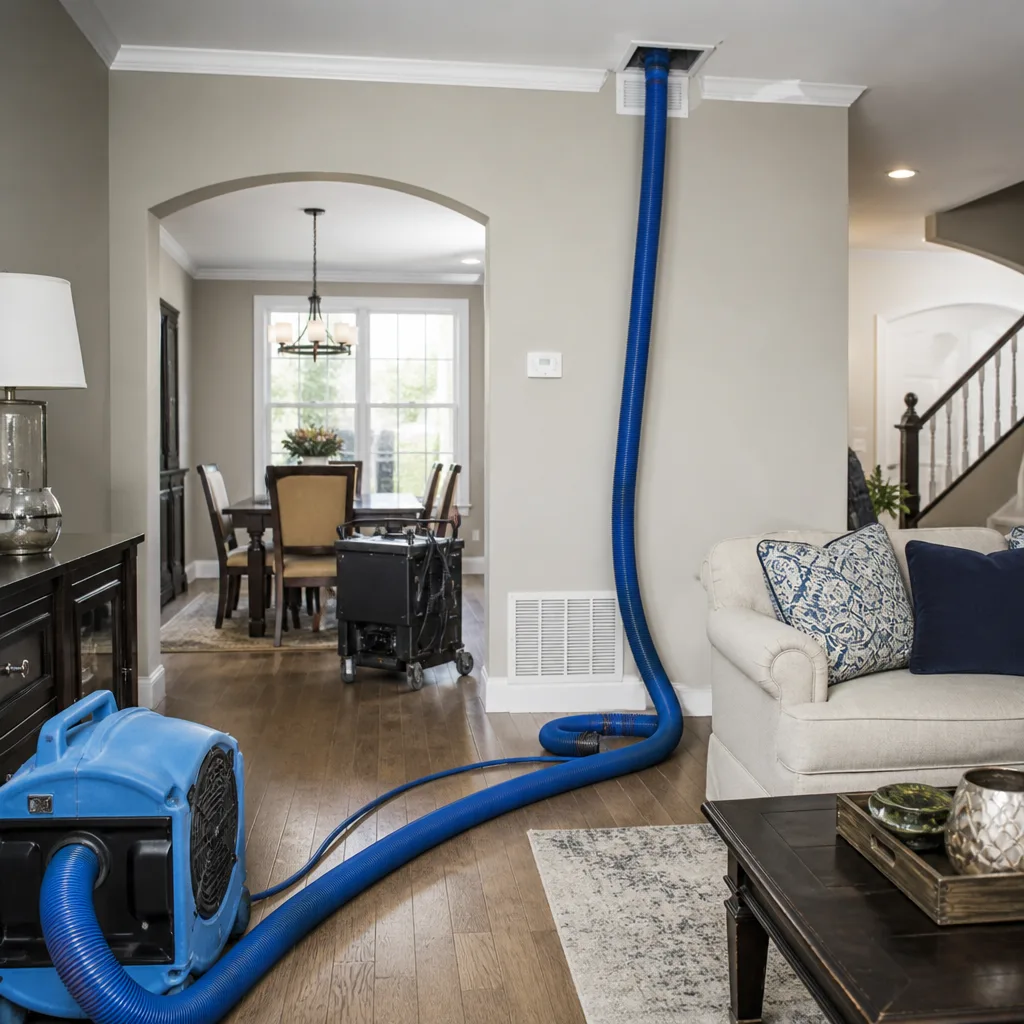 Whole-home duct cleaning
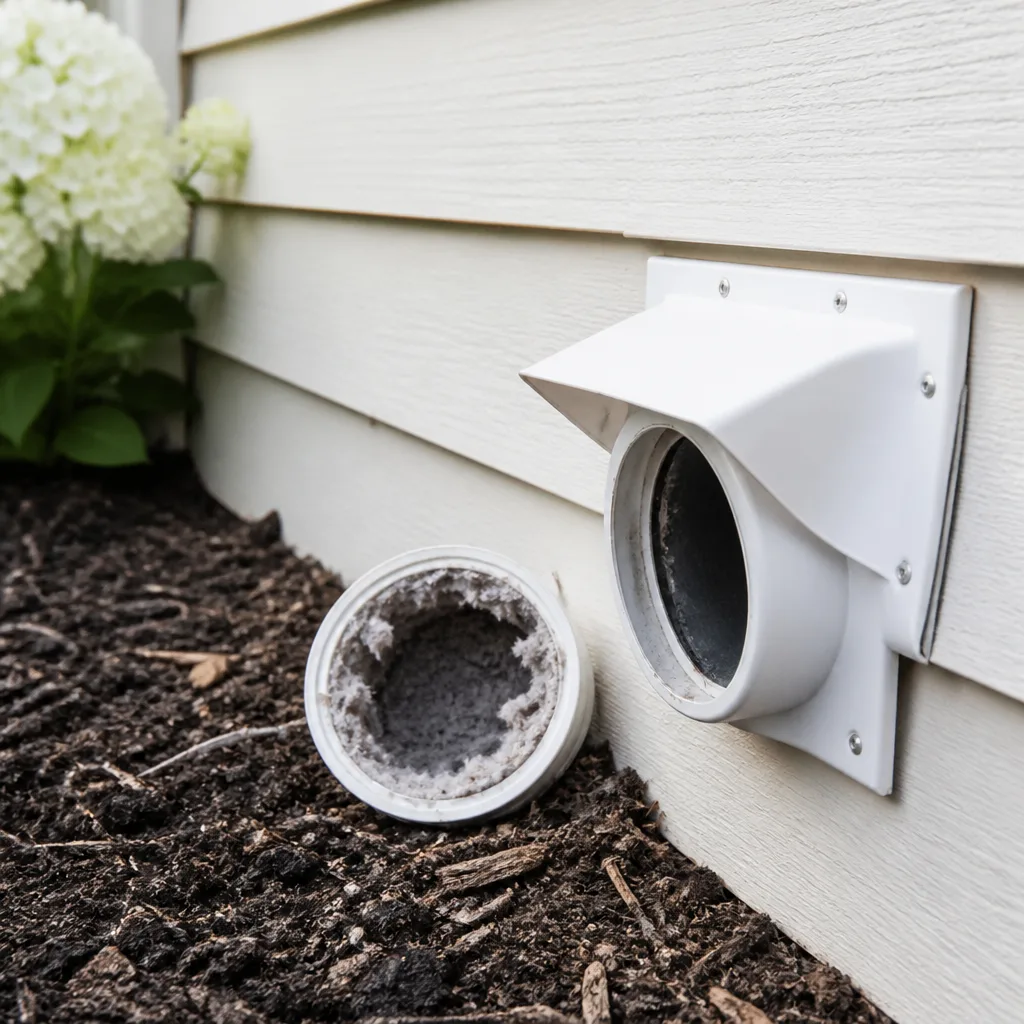 Dryer vent cleaning
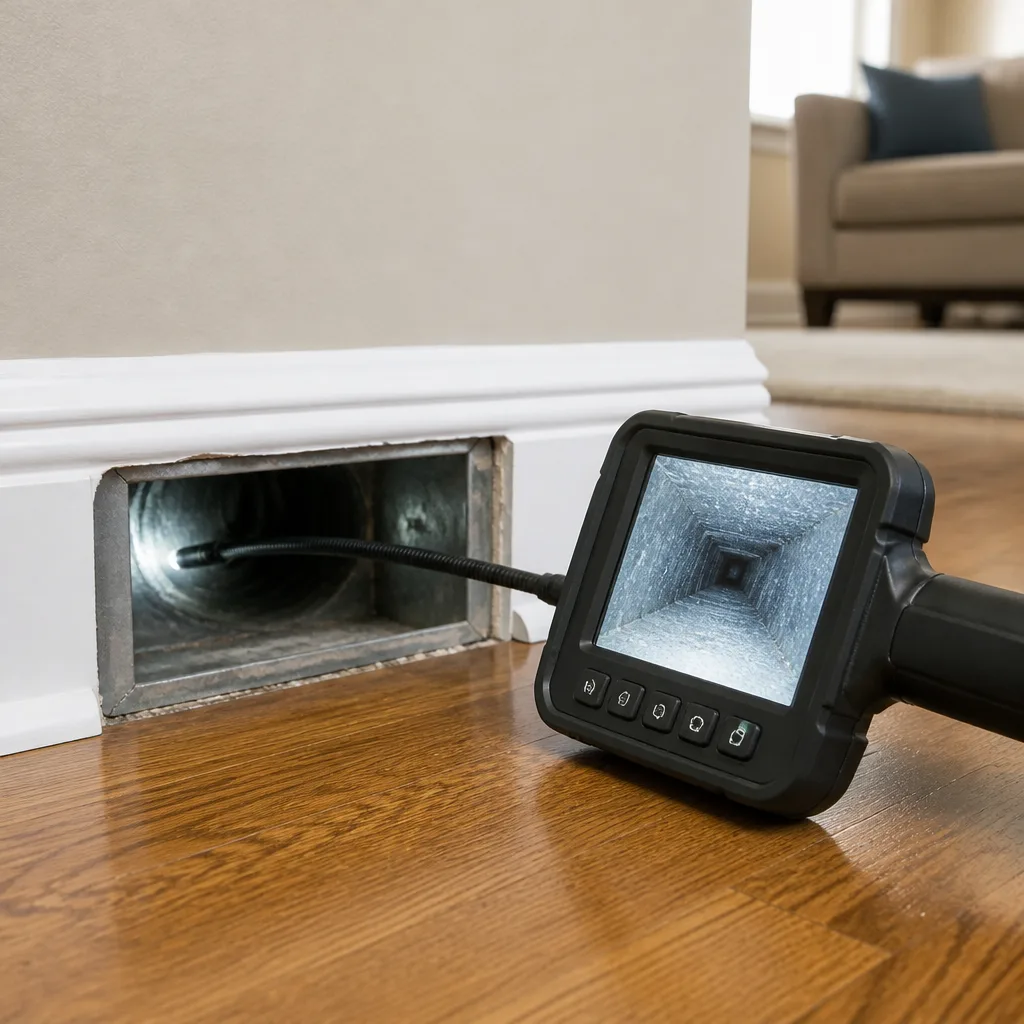 Camera inspection
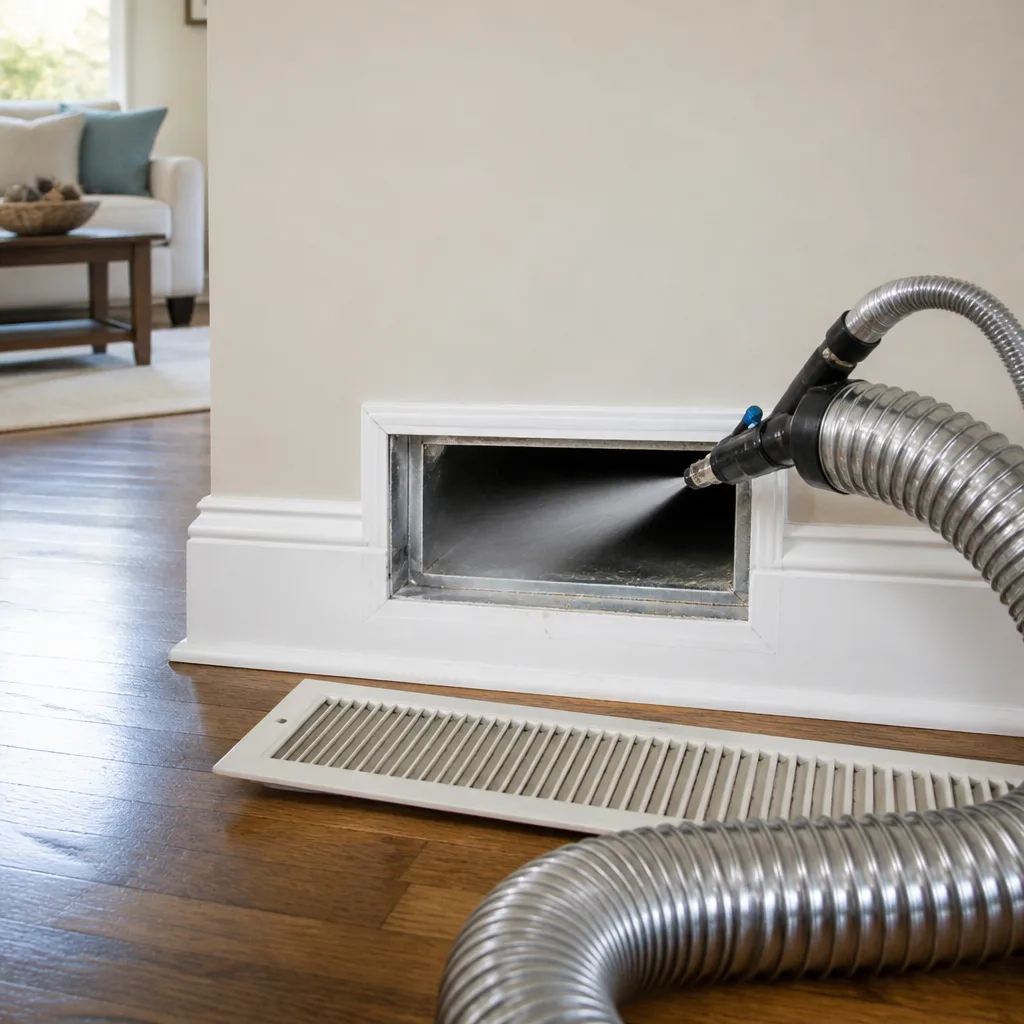 Sanitizing & deodorizing
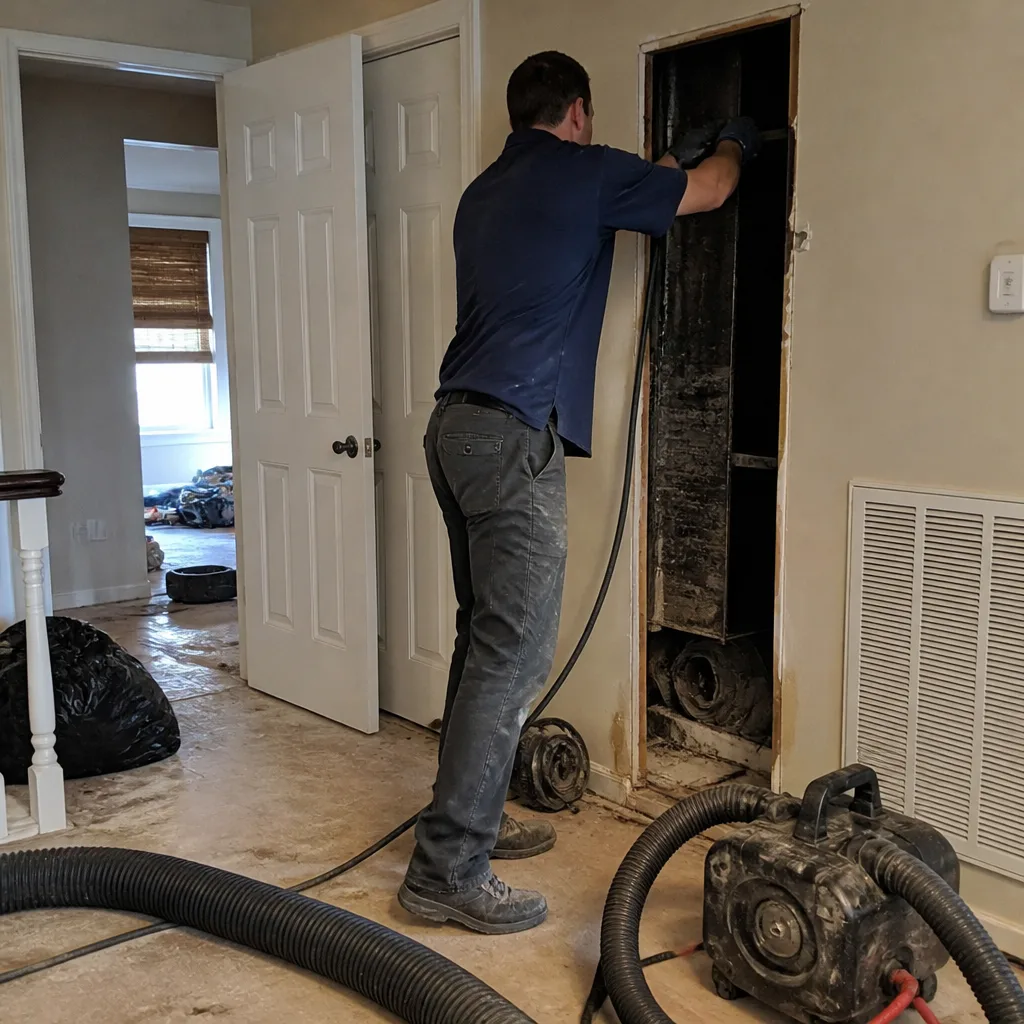
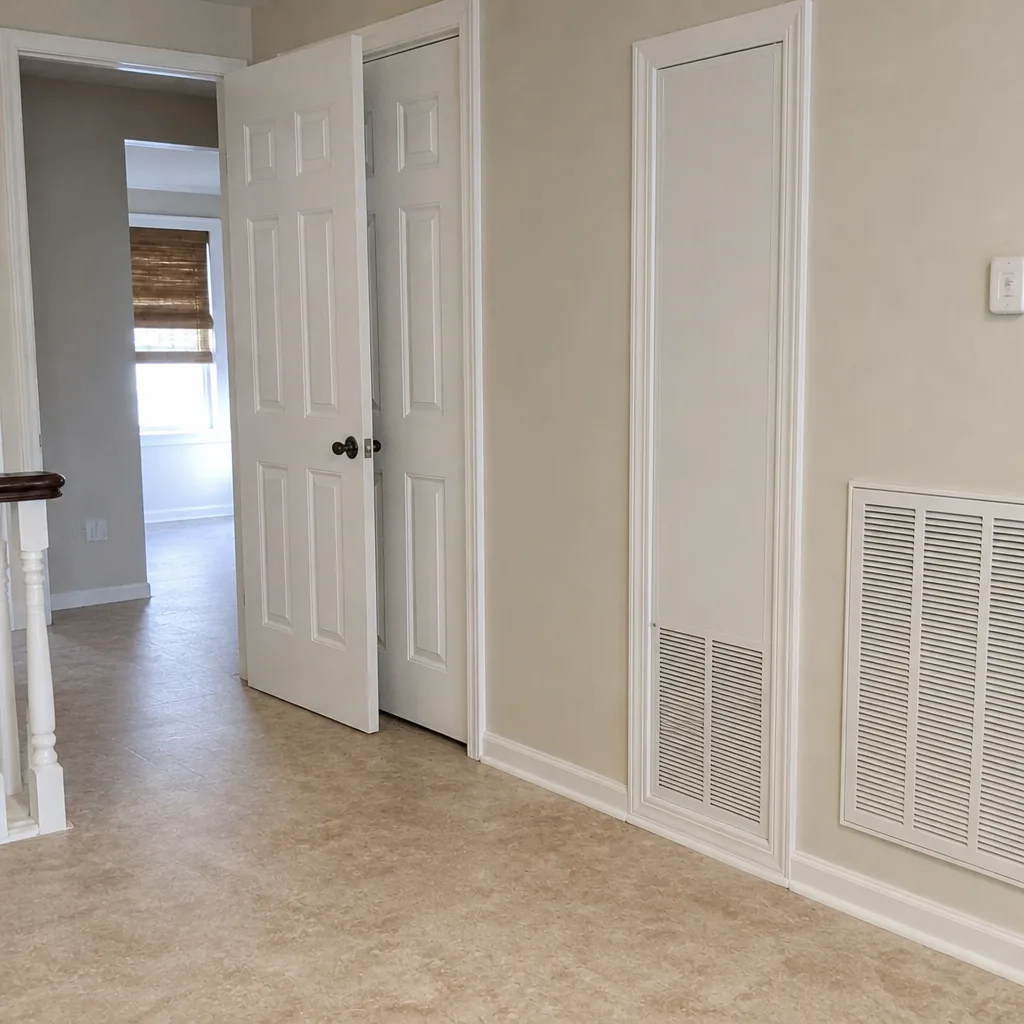
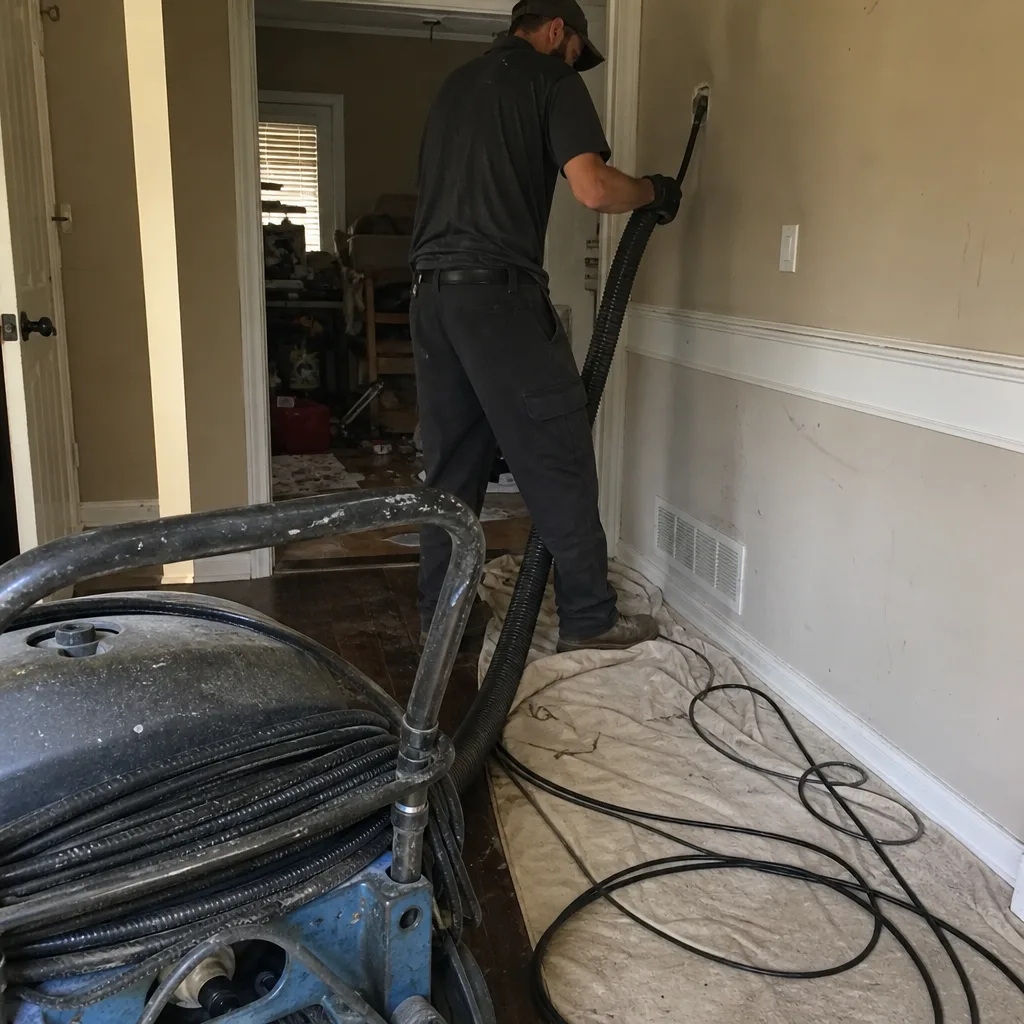
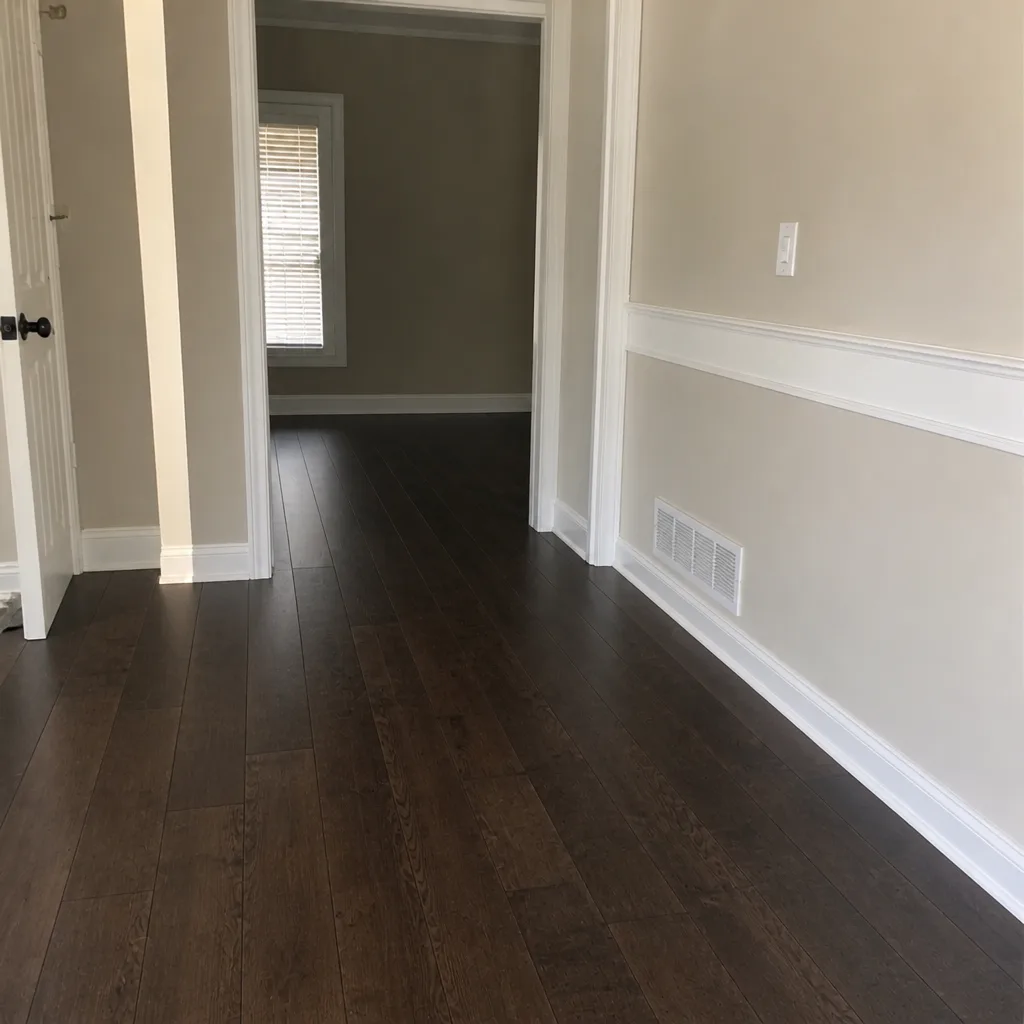
Whole-system duct and dryer vent check with before-and-after photos - you see exactly what came out of your vents
That "$99 whole-house special" is a bait ad - the real number appears once they are in your hallway, or the "clean" is a shop-vac at the register. We photograph the inside of your ducts before and after instead.
DIY vs Professional Air Duct Cleaning: The SouthPark Homeowner’s Decision Guide
Most homeowners assume the DIY versus professional question comes down to skill. It doesn’t. It comes down to physics. A $60 dryer vent brush kit and a shop vac can clean a register face and maybe 18 inches of duct behind it, but the contamination that actually affects system performance sits 15 feet in, past a 90-degree elbow, and stays put without enough negative pressure at the collection point to pull it loose. No consumer vacuum creates that pressure differential, which is why the question settles faster than any comparison chart. In this guide, written from SouthPark, we’ll walk through the equipment science, what you can legitimately do yourself, where DIY makes things worse, and how to decide for your own home.
Quick Answer
DIY air duct cleaning handles surface work only: register faces, filter changes, and reachable debris within the first foot or two of a branch run. Professional air duct cleaning in SouthPark is the right call when contamination sits deeper in the system, when a renovation or musty odor suggests settled debris, or when you want measurable before-and-after results. The dividing line is equipment physics: contractor-grade negative pressure with HEPA containment, not consumer vacuums, is what moves and captures debris from a full duct run.
Styles & brands we work with
- Whole-home duct cleaning
- Dryer vent cleaning
- Camera inspection
- Sanitizing & deodorizing
Table of Contents
- The Physics That Decide the Question: Negative Pressure and Airflow
- What You Can Legitimately Do Yourself
- When DIY Makes Contamination Worse
- SouthPark Housing and Why It Changes the Answer
- The Cost-Benefit Math: Cleaning Versus Airflow Loss
- How to Pre-Inspect Before You Get a Quote
- What Professional Equipment Actually Looks Like
- A Step-by-Step Way to Decide for Your Home
The Physics That Decide the Question: Negative Pressure and Airflow
Every duct cleaning method in the trade depends on one idea: source removal under negative pressure. That means the collection point sits downstream of the debris, pulling air toward it so loosened material travels out of the system instead of settling into rooms. Consumer shop vacs pull maybe 100 to 200 cubic feet per minute at the hose mouth, and that number collapses the moment the hose is 10 feet into a duct. Contractor-grade systems built on Rotobrush or Nikro platforms are engineered to hold 500 CFM or more at the collection point while an agitation tool works the duct from the opposite end.
Static pressure matters just as much. Duct systems in most SouthPark homes are designed around a specific static pressure range, and cleaning equipment has to push and pull hard enough to break up settled debris without collapsing flex duct or bending rigid joints. That’s an equipment physics question, not a skill question. A skilled homeowner with the wrong tools still can’t do source removal because the tool can’t generate the pressure.
Here’s the practical translation:
- Register cleaning – a rag, a vacuum and a screwdriver are enough. No special pressure needed.
- First two feet of duct – a shop vac with a long wand can reach this. Capture is limited but debris volume is small.
- Deep branch runs past a 90-degree elbow – needs an agitation tool on a flexible shaft plus a collection vacuum pulling 500+ CFM at the trunk. Consumer tools can’t deliver that combination.
- Trunk line and air handler plenum – requires a truck- or unit-mounted HEPA vacuum connected to the plenum so the entire system is under negative pressure during cleaning. This is where professional containment becomes non-negotiable.
Once you see the problem as a pressure differential rather than a cleaning task, the DIY-versus-professional question stops being a debate. You either have the equipment or you don’t.
What You Can Legitimately Do Yourself
Plenty of duct-related maintenance belongs in the homeowner’s hands, and we’d rather you keep doing it. The work that doesn’t compromise the system falls into clear categories, and doing these well actually makes a professional cleaning job more effective when it does happen.
- Clean register faces and grilles. Unscrew the register cover, wash it in the sink with dish soap, dry it, and reinstall. Dust on the grille face is cosmetic and gets pushed back into the room anyway.
- Change the filter on schedule. A 1-inch pleated filter wants attention every 60 to 90 days in most SouthPark homes, more often during pollen season or after a renovation. A dirty filter is the single biggest driver of low airflow you can control yourself.
- Clear the dryer vent. Disconnect the flexible transition duct behind the dryer, clear lint from the run, and vacuum the exterior termination. This is one of the highest-value DIY tasks in the house, and it’s part of the full-system service we offer through dryer vent cleaning for homeowners who want the whole run checked properly.
- Vacuum around the return. Dust and pet hair around the return grille get pulled into the system. Keep that area clean and you cut incoming debris load.
- Inspect visually with a flashlight. Pop off accessible registers and look inside. You won’t see much past the first elbow, but what you do see tells a contractor something useful.
What you shouldn’t attempt: pushing a shop vac hose deep into branch runs (you’ll agitate debris you can’t capture), spraying any sanitizer into ductwork (an improperly applied product leaves residue), or opening the air handler plenum to “vacuum it out” yourself. Those cross into territory where professional containment and remediation-grade filtration belong, which is why we run Abatement Technologies equipment during service.
When DIY Makes Contamination Worse
The worst outcome isn’t a failed DIY attempt. It’s an attempt that agitates contamination and leaves it in the system, or one that damages duct materials. Both happen, and both cost more to fix than a professional cleaning would have cost in the first place.
Three specific scenarios:
- Agitation without capture. Running a shop vac hose 8 feet into a branch run and wiggling it around breaks loose settled debris, but the vacuum can’t pull it back. That debris drifts deeper, settles in a low spot, or blows into a room the next time the system runs. You’ve redistributed the contamination rather than removing it.
- Disturbing duct insulation. Older duct systems in SouthPark and neighboring areas often have interior fiberglass liner. A rigid wand dragged through it tears the liner, and torn liner becomes a debris trap that grows over time. Repairing internal liner costs more than the cleaning you were trying to avoid.
- Wet contamination. If you suspect moisture intrusion inside a duct (musty smell after heavy rain, visible staining at a register), any DIY disturbance spreads mold spores through the system. Professional remediation with containment and HEPA filtration is the correct first step, not cleaning, and DIY risks turning a small problem into a whole-system one.
The other mistake we see in SouthPark homes is using a leaf blower to “blow out” the system. It’s the single worst DIY move available. It sends the entire duct load into the living space as a fine dust cloud, then it settles into upholstery, bedding, and everything else. It also compresses into the evaporator coil, which then needs professional cleaning through HVAC cleaning to undo.
SouthPark Housing and Why It Changes the Answer
SouthPark homes span a wide range of construction vintages, and the age of the house changes how much of the answer tilts toward professional work. In newer construction around SouthPark, duct systems are usually flexible insulated runs that reach every room from a central trunk, which means plenty of elbows and long runs where consumer vacuums lose effectiveness quickly. In older SouthPark homes, duct systems may include rigid galvanized trunk lines, internal liner, or transitions that were modified by past HVAC work. Each layer of complexity makes DIY reach harder.
The local climate matters too. SouthPark summers are humid, and humidity that migrates into a duct system through gaps or a poorly sealed return creates conditions where dust and organic debris clump and stick. Once that happens, surface vacuuming at the register does nothing; the debris needs agitation and source removal from inside the run. Pollen season in this part of North Carolina also sends a heavy load of fine particulate into return air, which settles into the return plenum over months. That’s a professional job, and it’s why we consider the return side as important as the supply side.
SouthPark homeowners in older housing stock should also expect the possibility of duct repair needs discovered during cleaning. Sagging runs, disconnected joints at the plenum, and unsealed seams are common in homes that have seen multiple HVAC replacements. Cleaning without repair reseals the symptom, not the cause, which is why we offer air duct cleaning alongside repair and sealing as one scope.
The neighborhood itself is dense with mature trees, which contributes debris to roof returns and outdoor condenser coils. SouthPark homes with rooftop or crawlspace duct routing tend to accumulate higher organic debris in the return plenum than newer construction does, which is a reason to inspect and clean the plenum, not just the branch runs.
The Cost-Benefit Math: Cleaning Versus Airflow Loss
Cost framing for duct cleaning lands in a realistic range when you compare it against what restricted airflow actually does to an HVAC system. When ductwork carries enough debris to raise static pressure, the blower works harder, the evaporator coil loses heat-transfer efficiency, and compressor runtime stretches. Every one of those effects shows up on your utility bill and shortens equipment life.
A typical professional cleaning in SouthPark runs on a whole-system estimate, priced per job rather than per vent, with the estimate written before work starts. That’s the written-estimate model and we insist on it because per-vent pricing is where the bait-and-switch reputation in this industry comes from. A “low” advertised price becomes a much larger invoice once the technician is on site and the work is “extended” beyond the original scope. We don’t quote teaser coupons or per-vent prices. You get a whole-system number in writing, and that’s the number.
Compare that to the cost of doing nothing. A system fighting restricted airflow runs longer cycles throughout the hot months, and that extra runtime compounds over a full SouthPark summer. Add a possible coil cleaning and an early blower motor replacement, and the “savings” of skipping a cleaning aren’t savings at all. Combine that with a repair-and-seal scope that closes the gaps letting debris settle in the first place, and the cleaning becomes a maintenance action, not a one-off expense. That’s the framing we walk through in our Air Duct Cleaning SouthPark approach to full-system work.
How to Pre-Inspect Before You Get a Quote
A good pre-inspection takes 20 minutes with a flashlight and your phone camera, and it gives a contractor diagnostic information that improves the estimate and the cleaning plan. This is the DIY task we most want homeowners to actually do.
- Photograph every register. Supply and return, ceiling and floor, with the grille both on and off. Note which registers show visible debris and which look clean.
- Do the tissue test at each supply register. Hold a tissue against the grille while the system runs. If the tissue barely moves, airflow at that register is low, which points to a restricted run, a closed damper, or a leaking duct upstream.
- Look into the return. Open the return grille and use the phone camera light to look up the return plenum. Note dust buildup on the filter housing or plenum walls.
- Smell test. Run the system fan-only for 15 minutes and note any musty or dusty odor at the registers. A persistent odor changes the diagnosis from cleaning to possible moisture issue.
- Check the filter and coil access. Note the filter size, MERV rating, and last change date. If you can see the evaporator coil through an access panel, note whether it looks dusty or clean.
- Photograph the air handler and plenum connections. Visible gaps at the plenum or at flexible duct joints tell a contractor a repair scope is likely.
Bring those photos to the estimate. A contractor who can quote with real information usually gives a tighter number, and you avoid the “we’ll see what we find” pricing conversation entirely. If you want a legitimate visual check on the full system, our team can help you plan around HVAC cleaning scope so the estimate covers what your pre-inspection actually showed.
What Professional Equipment Actually Looks Like
The gap between DIY and professional equipment is specific, and it’s worth knowing what you’re paying for. Professional systems aren’t fancier shop vacs; they’re engineered around source removal physics.
- Rotobrush and Nikro duct cleaning systems. These are contractor-grade platforms designed for agitation and capture in the same pass. They use rotary brush heads on flexible shafts driven from outside the duct, paired with HEPA-filtered collection units. Consumer kits lack the shaft length, the brush variety, and the collection CFM.
- Abatement Technologies equipment. These are the same HEPA containment and negative-air units used in professional remediation. Placing one at the plenum keeps the entire duct system under negative pressure during cleaning, which is what stops debris from escaping into the room.
- Honeywell and Aprilaire IAQ products. After cleaning and repair, bridging to filtration upgrades that keep the system cleaner longer. We work with both lines, so the cleaning isn’t the end of the story; the whole-home media filter added afterward keeps the result in place.
- Guardsman-grade protection for sanitizing. When a sanitizing treatment is part of the scope, Guardsman-grade standards apply to the product selection and application method.
You don’t need to match this equipment at home. You need to recognize it as the reason the cleaning works, and to ask any contractor you hire which equipment system they run and how they achieve negative pressure at the plenum. That question tells you in 30 seconds whether the quote is credible.
A Step-by-Step Way to Decide for Your Home
Here’s how we’d walk a SouthPark homeowner through the decision in a single conversation. Work through these steps in order and the recommendation usually lands clearly.
- How long has it been? If the system has never been cleaned and the home is more than a few years old, professional cleaning is warranted. If it was cleaned recently, DIY maintenance is fine.
- What drove the question? Allergy symptoms, a musty smell, visible debris at registers, or a recent renovation all point to professional. Routine maintenance dust points to DIY.
- What’s the housing stock? Flex duct with long runs and multiple elbows in a newer SouthPark home means deep contamination is likely, and DIY reach is limited. Older rigid systems may have internal liner that shouldn’t be touched with DIY tools.
- Do your own pre-inspection. Run the tissue test and photograph registers. If airflow is low at multiple registers or visible debris extends past the first elbow, move to professional.
- Check for repair needs. Gaps at the plenum, sagging duct runs, or disconnected joints mean the scope should include repair and sealing. Cleaning without repair undercuts the whole result.
- Get a written whole-system estimate. Ask for one flat price agreed before work starts, with before-and-after photos of your own ducts included. If the contractor won’t put that in writing, move on.
- Ask about downstream protection. The right scope includes a filtration or IAQ product recommendation so the result holds. We work with Honeywell and Aprilaire for exactly that reason.
That’s the whole decision. It’s not about whether you’re capable of cleaning something; it’s about whether your tools can generate the pressure differential the system requires. Ours can. Yours can’t. Once you accept that, the rest of the decision follows from the pre-inspection facts.
Common Mistakes to Avoid
- Using a leaf blower to “clear out” the ducts. It pushes the entire duct load into the living space as a dust cloud and compresses debris onto the evaporator coil. Recovery requires professional HVAC cleaning, which costs far more than the cleaning you skipped.
- Pushing a shop vac hose deep into a branch run. Agitating debris without sufficient capture at the trunk redistributes contamination deeper into the system. The debris either settles in a low spot or blows into rooms on the next cycle.
- Spraying “duct sanitizer” from a big-box store. Consumer sanitizers applied into a system without proper containment leave residue that becomes a food source for biological growth. Guardsman-grade protection standards exist for a reason, and they don’t correspond to DIY sprays.
- Accepting a per-vent price quote. Per-vent pricing in SouthPark and elsewhere invites the bait-and-switch: a low advertised figure that grows with “extended scope” once the technician is on site. One flat price per system, written before work starts.
- Skipping duct repair because the cleaning “looked good.” Cleaning resolves settled debris; it doesn’t close the gaps letting new debris in. Repair and sealing are the root cause fix, and skipping them means the system refouls faster.
- Ignoring a musty smell after the cleaning. If an odor persists, that’s a moisture diagnostic, not a cleaning failure. Wet insulation or a duct leak is the likely cause and needs sealing, not more cleaning.
- Trusting an estimate that has no before-and-after photos in writing. The photos are how you know what the technician actually found and what changed. We build that into every scope.
See the difference
 Before
 After
 Before
 After
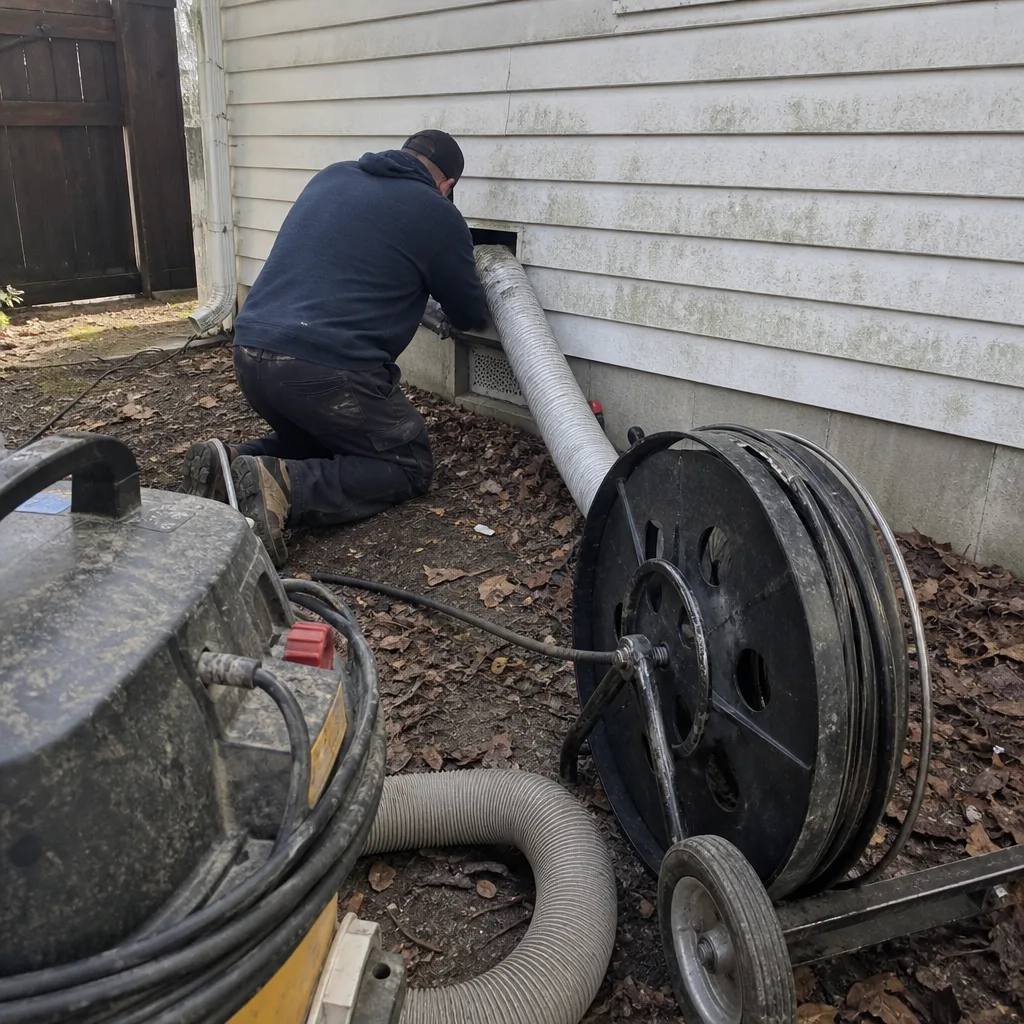 Before
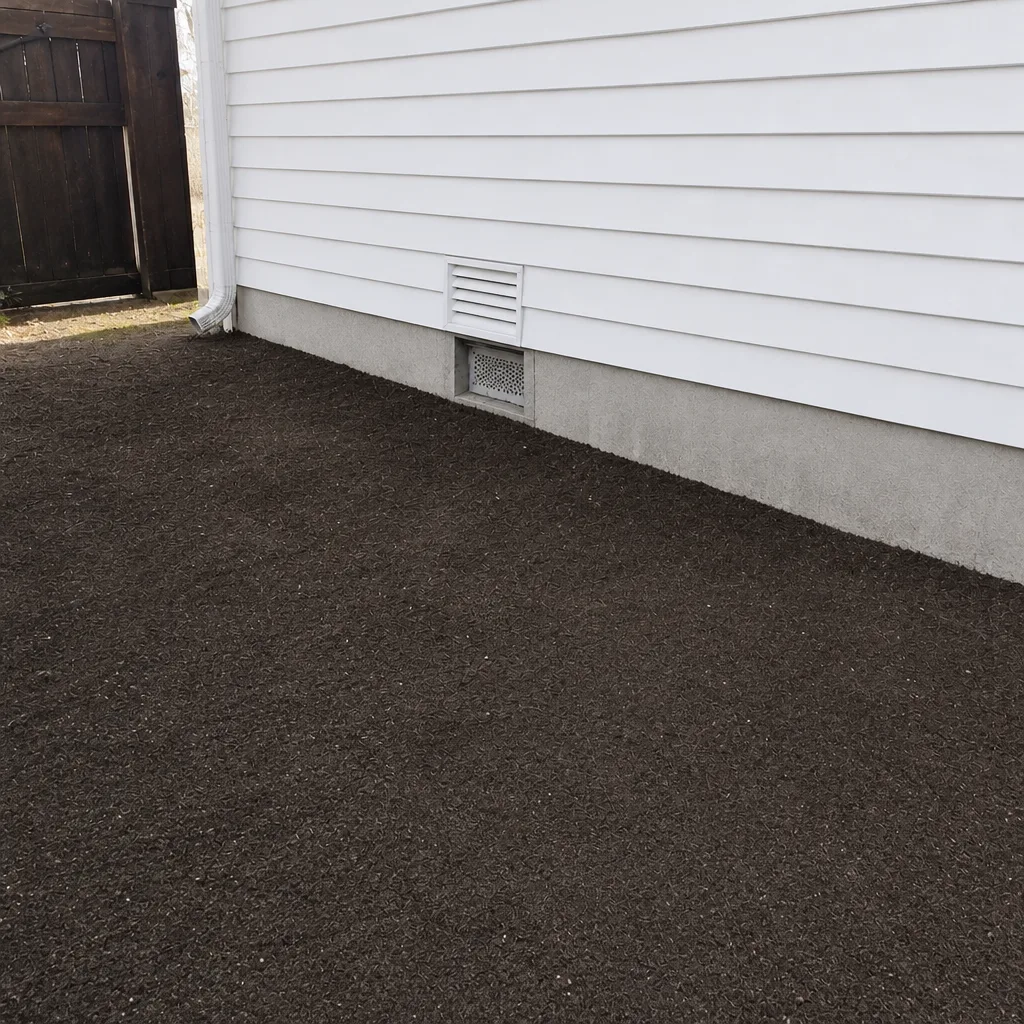 After
When to Call a Professional
Call a professional when the debris extends past the register and into the run, when a musty or dusty smell persists after filter changes, when the home is about to close on a sale and the buyer’s inspector flags duct condition, or when a recent renovation produced fine dust that has settled into the return plenum. Call when airflow at multiple registers is measurably low, or when a tissue test at supply registers shows the same weak result across rooms. Call when you want the result documented, with before-and-after photos and a written whole-system estimate that matches the actual scope. DIY handles the surface maintenance; the physics of the deeper system needs contractor equipment. Air Duct Cleaning SouthPark offers free estimates in SouthPark – call (833) 468-3043 for an exact quote.
Frequently Asked Questions
No. A shop vac cleans the register face and roughly the first 18 inches of duct, but it cannot generate the 500+ CFM of negative pressure at the trunk line required to pull debris out of a full branch run. That’s why the answer to DIY vs professional duct cleaning comes down to equipment, not skill.
Most homes benefit from a professional cleaning every three to five years, with a shorter interval after a renovation or if anyone in the home has significant dust sensitivity. Annual filter changes and register cleaning carry the maintenance between professional visits. Call (833) 468-3043 for a free estimate tailored to your home.
Cheap quotes usually reflect per-vent pricing with a low teaser figure that grows once the technician is on site, or they skip the repair and seal scope that actually fixes the cause. We quote one flat price per system, written before work starts, so the number you see is the number you pay. Call (833) 468-3043 for a whole-system estimate.
Ask for before-and-after photos of your own ducts, not stock photos. A credible contractor photographs the plenum, several branch runs, and the air handler access as part of the scope. We include that in every job because it’s the only way you can verify the work.
It can, when the debris load is high enough to raise static pressure and stretch blower runtime. Cleaner ducts improve airflow, reduce runtime, and let the coil transfer heat more efficiently. The exact savings depend on how restricted the system was before cleaning, and the written estimate frames the scope honestly.
Yes. Older SouthPark homes often have rigid duct systems with internal liner that can be damaged by aggressive DIY methods, plus more likelihood of disconnected joints and unsealed plenum connections. The cleaning scope should include repair and sealing alongside source removal. Call (833) 468-3043 to talk through what your home is likely to need.
The Bottom Line
DIY air duct cleaning covers the surface: register faces, filter changes, dryer vent clearing, and a phone-camera pre-inspection. Professional cleaning covers the physics: source removal from inside the run under proper negative pressure, with repair and sealing that closes root causes. The decision breaks down by equipment capability, not by homeowner effort. Do the surface work yourself, use the pre-inspection to give a contractor better information, and bring in the professional scope when the contamination is deep, the smell persists, or the system shows restricted airflow. Contractor-grade equipment from Rotobrush, Nikro, and Abatement Technologies is what makes the deeper cleaning possible – and that’s the line that settles the question.
Call (833) 468-3043. We answer 24/7. Fast dispatch from 7am to 7pm, Sunday through Friday. Free estimates in SouthPark, one flat price per system agreed before work starts, and before-and-after photos of your own ducts included.
Written by the team at Air Duct Cleaning SouthPark.